
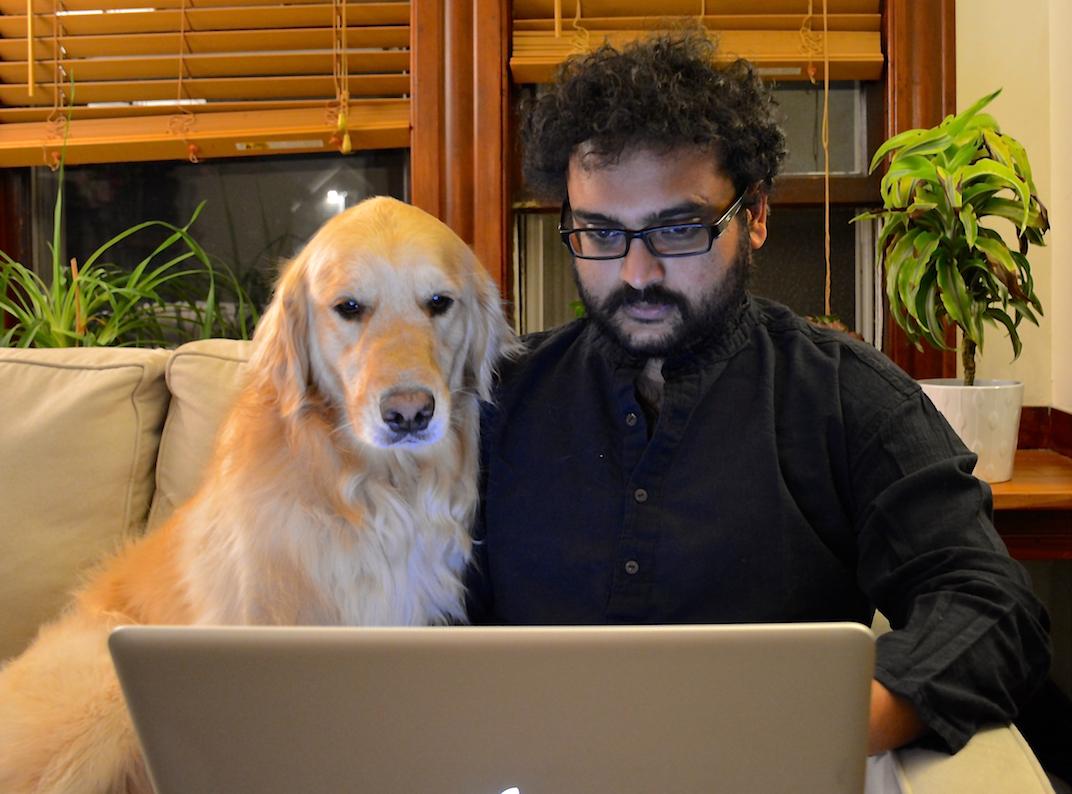
Haribabu Arthanari, Ph.D.
We utilize a combination of techniques including NMR spectroscopy, NMR-based fragment and high throughput screening, and biophysical and cell-based assays to map hotspots in the interaction interface, to further understand the molecular mechanisms orchestrated by these interactions, and to identify disruptive inhibitors that may be developed into treatments for the related pathologies.
Haribabu Arthanari received his Bachelors in Chemistry from the Madras Christian College and his Masters in Chemistry from the Indian Institute of Technology (IIT)-Madras. He did his graduate studies at Wesleyan University with Philip Bolton and earned his PhD in 2004. He then joined the laboratory of Gerhard Wagner for his post-doctoral training. He was promoted to a lecturer in 2010 and moved to his independent position in 2016.
Research:
Protein-Protein Interactions (PPIs) is the Holy Grail of therapeutic intervention, offering a plethora of unique structural landscapes as potential targets. I use structure-guided approaches to characterize and validate these interactions in the context of disease models. We utilize a combination of techniques including NMR spectroscopy, NMR-based fragment and high throughput screening, and biophysical and cell-based assays to map hotspots in the interaction interface, to further understand the molecular mechanisms orchestrated by these interactions, and to identify disruptive inhibitors that may be developed into treatments for the related pathologies. Our current areas of focus are 1) the critical interactions between transcription factors and the general transcriptional machinery, including the Mediator complex, co-activators, and remodeling factors, and 2) translation initiation machinery demonstrated to be dysregulated in cancer disease states. We are working on making use of NMR-derived metabolomics data in the identification of novel metabolite disease markers that in combination with cellular pathway analysis can be used to identify new potential therapeutic targets. In order to facilitate our research goals, we also work on the development of new NMR methods for fragment screening, metabolite fingerprinting and protein-ligand interaction identification. Our work on novel pulse sequences, pulse designs, labeling strategies and sampling schemes let us push the boundaries of NMR as a technique, allowing us to tackle larger systems by NMR.
Address:
Longwood Center
LC-3311
360 Longwood Ave.
Boston, MA 02115
J Biomol NMR
View full abstract on Pubmed
Biomol NMR Assign
View full abstract on Pubmed
J Magn Reson
View full abstract on Pubmed
Sci Rep
View full abstract on Pubmed
Cell Rep
View full abstract on Pubmed
Sci Rep
View full abstract on Pubmed
J Biomol NMR
View full abstract on Pubmed
Biomol NMR Assign
View full abstract on Pubmed
Nature
View full abstract on Pubmed