
Jon Clardy, the inaugural incumbent of the Christopher T. Walsh, PhD Professorship in Biological Chemistry and Molecular Pharmacology, died peacefully at home surrounded by family on October 31, 2026 from complications of acute myeloid leukemia.
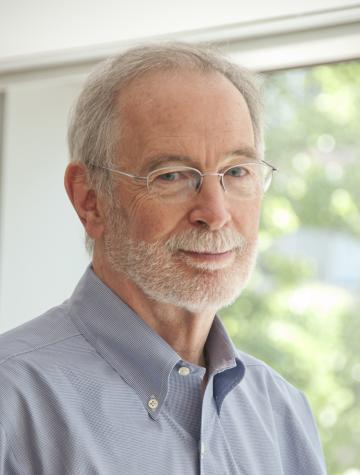
Jon received his Bachelor’s degree in Chemistry from Yale, and his Ph.D. in Organic Chemistry from Harvard. His initial faculty appointment was in the Chemistry Department at Iowa State University. He then left Iowa State to become the Horace White Professor at Cornell University, served a five-year term as department chair, and later a term as a Senior Associate Dean in the College of Arts and Sciences.
The late Chris Walsh rescued Jon from his administrative duties when he recruited Jon to Harvard Medical School in 2002 as one of the anchor faculty in the nascent field of chemical biology. Chris likened Jon to Yo-Yo Ma, a virtuoso with elegant standards at the interface of chemistry and biology. Jon was a master molecular prospector whose career was defined by an extraordinary ability to discover and structurally elucidate complex natural products with unusual bioactivities. Jon’s landmark discoveries began with the structural characterization of saxitoxin, an object of fascination both in the scientific literature and in newspapers as the original ‘red tide toxin’. In subsequent work, Jon would uncover the molecular identities of natural products as diverse as the phosphatase inhibitor okadaic acid, extracted from marine sponges, to novel gerumycins produced by bacterial symbionts of leaf cutter ants, to inflammatory polysaccharides and lipid immunomodulators derived from gut microbiota. Jon’s breadth of investigation spanned the gamut from evolution to ecology, as he continued to innovate and make seminal discoveries that impact human health.
Jon’s scientific prowess was not limited to small molecules. He was also the first to characterize the structures of the widely used immunosuppressive agents FK506 and rapamycin bound to their protein partner FKBP12. As natural products chemistry started to become increasingly influenced by the power of genetic analysis of natural product biosynthetic pathways in bacteria, Jon was an early champion of the synergistic potential of chemistry and genetics, perhaps best illustrated by his work on decoding biosynthetic pathways from cryptic DNA in the early 2000’s, which saw him pioneering the approach for discovery of microbial metabolites through the isolation and expression of environmental DNA (eDNA).
When asked about Jon’s research, Dr. Stephen Blacklow, Gustavus Adolphus Pfeiffer Professor and Chair of the department of Biological Chemistry and Molecular Pharmacology, stated, “I sincerely doubt there is another living scientist who has had a broader footprint across the field of natural products chemistry than Jon Clardy. If I were choosing a literary analogy, I would describe Jon as the Sherlock Holmes, or perhaps the softer spoken Hercule Poirot of chemistry – the chemical detective who always gets his molecule.”
Jon has also made sustained contributions to education and institutional service. He helped start and sustain the Microbial Sciences Initiative at Harvard, and was instrumental in the early development of ties between Harvard Medical School and the Broad Institute through his scientific collaborations. In addition, beyond piquing the interests of scores of undergraduates in chemistry at Harvard University with courses such as “Molecules of Life” and “Psychoactive Molecules from Babylon to Breaking Bad,” Jon established one of the first chemical biology graduate programs in the country offering specific training in this exciting new discipline. He then served as the ChemBio graduate program director for the first five years to ensure its long-term success.
Jon received wide recognition over the course of his career, including fellowships from the Alfred P. Sloan Foundation, the Camille and Henry Dreyfus Foundation, and the John Simon Guggenheim Memorial Foundation. He received the Ernest Guenther Award in the Chemistry of Natural Products and an Arthur C. Cope Scholar Award from the American Chemical Society. He was a Fellow of the American Academy of Arts and Sciences and the American Association for the Advancement of Science, an elected member of the National Academy of Sciences, and won Cornell's highest award for teaching in the College of Arts and Sciences.
Jon is survived by his wife, Andrea Fleck Clardy, his sons Peter and Benjamin, his daughters-in-law Rachel Reid and Perri Harris, and his beloved grandchildren: David, Jules, Emma, and Joshua. He is also survived by his siblings: Betsy and her husband Richard Nelson, Christopher and his wife Ann Fisher, and Susan McNevin.
A memorial service for him will be held in early Spring.